


|



|
Hurdles for Foreign Students
|
Despite increased government scrutiny, international students are applying to BU in greater numbers.
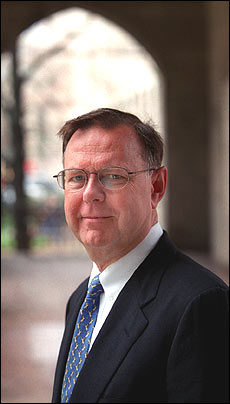 Globe Staff Photo / Michele McDonald |
Foreign students had trouble reentering the country this winter because of tighter antiterrorism rules. Will they have the same problems coming back in the fall?
They do face additional clearing procedures. [DeWinter is Boston University's associate provost for international education.] There have been some delays in obtaining visas, and they will face more scrutiny in getting security clearances. They will have to be sure they report changes of address, not only for them but their dependents. There has been a list published about restrictions on studying some subjects, particularly for graduate students, such as in some sensitive areas in the sciences.
Will Middle Eastern college students have an especially hard time?
There might be some delays there. In fact, my sense is that some students may even choose to stay here over the summer, so there's no risk in not being here for the start of classes. One thing that's happened is, there have been fewer people in some of the embassies in the countries -- because of the political situation and SARS and so forth -- so that puts some pressures on embassies to deal with visa renewal.
What was it like for your foreign students, especially those from Middle East countries who were under close watch by the US government?
Our students have been quite comfortable on campus and are doing very well, academically and socially. There is no worry about staff monitoring them. We fully inform them of all government regulations, so they are in compliance and can maintain immigration status. The government is now using an electronic database to track foreign students, whereas before we had paper documents. The information goes directly to the database, which makes it easier to track students who drop out or leave. I don't think we've ever had a student disappear without us knowing what happened.
Are you uncomfortable with the government electronically monitoring foreign students?
I think the government had access to this information before. Students have always had to register in some way; they've always had to come through our office. Earlier, it was done on paper and in person. As an undergraduate, I studied in Europe and had to register -- to take my passport to the police and fill in paperwork.
Do you think you'll see fewer foreign students coming back to Boston?
I don't know. We have nearly 4,500 of them; about 400 are from Middle East countries. The international student population at BU is the largest in New England and has been stable for many years. Our applications are up 10, 11 percent for next year. The value of an American education, no matter how one looks at it, is exceedingly high around the world.
—Patrick Healy
This story ran in the Boston Globe Magazine on 6/8/2003.
© Copyright 2003 Globe Newspaper Company.
© Copyright 2003 New York Times Company |
